Direct Factory Supply for High-Purity Flocculants, Coagulants & Rheology Control Agents
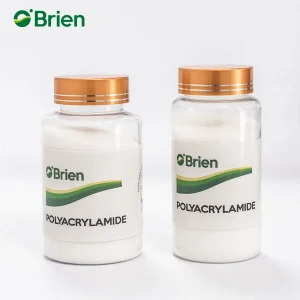
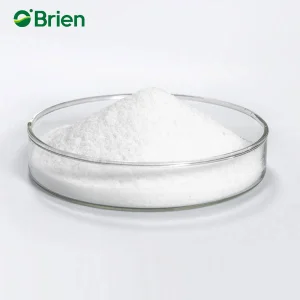
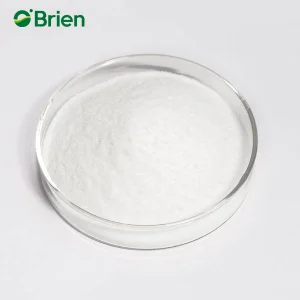
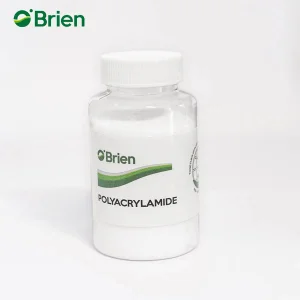
In modern industrial solid-liquid separation, mineral extraction, and environmental remediation, Nonionic Polyacrylamide (NPAM) serves as a critical synthetic macromolecular polymer. Derived via the controlled polymerization of acrylamide monomers without ionizable functional groups along its backbone, NPAM demonstrates extraordinary efficiency in neutral, highly acidic, and complex chemical environments where charged polyelectrolytes fail due to charge neutralization or precipitation.
As global environmental directives enforce stricter Zero Liquid Discharge (ZLD) standards and industrial operators push for improved operational yields in hydrometallurgy and wastewater purification, selecting a specialized wholesale nonionic polyacrylamide supplier becomes a strategic mandate. This comprehensive analysis evaluates the chemical physics, global market trends, manufacturing paradigms, and field performance metrics of NPAM across multiple global enterprise sectors.
Nonionic Polyacrylamide ($\text{[-CH}_2\text{-CH(CONH}_2\text{)-]}_n$) is characterized by an uncharged linear hydrocarbon backbone embellished with repeating neutral amide groups ($\text{-CONH}_2$). Unlike Anionic Polyacrylamide (APAM) carrying carboxylate ions ($\text{-COO}^-$) or Cationic Polyacrylamide (CPAM) containing quaternary ammonium functionalities, NPAM operates predominantly via hydrogen bonding and high-molecular-weight bridging dynamics rather than electrostatic charge neutralization.
When introduced into colloidal suspensions, the primary amide nitrogen and oxygen atoms form strong hydrogen bonds with hydroxyl groups or active sites present on suspended mineral micro-particles, oxide precipitates, and organic matter. The high-molecular chain (ranging from 3 Million to over 15 Million Daltons) extends far beyond the electrical double layer of the particles, adsorbing onto adjacent particulates simultaneously. This mechanism generates dense, micro-structural flocs with rapid settling velocities and enhanced shear resistance during dewatering processes.
Determining the ideal polymer chemistry requires evaluating slurry pH, background salinity, ionic strength, and particle surface charges. The following matrix illustrates the performance domain of NPAM relative to ionic variants:
| Polymer Variant | Primary Charge State | Optimal pH Range | Primary Flocculation Mechanism | Dominant Industrial Applications |
|---|---|---|---|---|
| Nonionic (NPAM) | Neutral / Non-ionic | 1.0 – 8.0 (High Acid Stability) | Hydrogen Bonding & Inter-particle Bridging | Acidic mineral leaching (copper/gold), coal tailings, soil stabilization, low-pH industrial effluents. |
| Anionic (APAM) | Negative ($\text{-COO}^-$) | 6.0 – 14.0 (Alkaline environments) | Charge Neutralization & Adsorption Bridging | Red mud clarification (Bauxite), municipal primary water treatment, sandy soil aggregate binding. |
| Cationic (CPAM) | Positive ($\text{-N}^+\text{R}_3$) | 3.0 – 10.0 | Electrostatic Attraction & Charge Patching | Biological sludge dewatering (activated sludge), paper retention/drainage aids, organic dye wastewater. |
Oubo Chemical Co., Ltd. was established in 2011 within the Free Trade Zone of Qingdao, China. Over more than a decade of technological accumulation and continuous expansion, Oubo has positioned itself as a global tier-one manufacturer of water-soluble polymers. Achieving an annual polyacrylamide production capacity exceeding 50,000 Metric Tons in 2018, the enterprise maintains an annual business growth rate of over 10% through technical refinement and sustainable customer partnerships.
A cornerstone of Oubo's competitive advantage lies in its proprietary microbial enzymatic bio-catalysis process for acrylamide monomer synthesis. Traditional chemical catalysis utilizing copper catalysts generates hazardous trace heavy metal contaminants and unwanted reaction byproducts that impair long-chain polymer growth. By deploying advanced bio-catalysts, Oubo produces hyper-pure acrylamide monomers with minimal residual monomer content (< 0.05%), enabling the consistent production of ultra-high molecular weight NPAM with near-zero structural branching.
Operational excellence at Oubo Chemical is reinforced by strategic raw material procurement alliances with world-class petrochemical leaders including SINOPEC and Eni. Every manufacturing stream is fully automated and governed by strict ISO 9001:2008 Quality Management System standards. To ensure batch-to-batch consistency for critical mining and municipal applications, every production lot undergoes a rigorous three-tier Quality Control (QC) screening:
Designed for Enterprise Efficiency, Environmental Compliance, and Extreme Operational Reliability
Maintains structural integrity and hydrogen-bonding affinity in high-acid media (pH < 2.0) where anionic polymers undergo protonation and lose operational functionality.
Synthesized via patented biological enzymatic routes ensuring high chemical purity, ultra-high molecular chain lengths, and trace residual acrylamide levels (<100 ppm upon request).
Specially processed granular structures engineered for high dissolution kinetics, eliminating persistent gel-balling ("fish eyes") and optimizing chemical feed system efficiency.
Tailored molecular weight parameters (3M to 15M+ Daltons) and particle size distributions engineered precisely for target thickeners, centrifuges, and filter presses.
Fully compliant with international environmental directives, ISO 9001 quality management, REACH standards, and rigorous industrial discharge permits worldwide.
Engineered Polyacrylamide Chemistry Delivering Unmatched Efficiency Across Key Industrial Sectors
In hydrometallurgical operations, copper, uranium, gold, zinc, and nickel extraction techniques utilize aggressive acid leaching baths (e.g., sulfuric acid slurry environments). Standard anionic polymers instantly protonate under acidic conditions, neutralizing their active carboxylate groups and completely losing settling performance.
Oubo's specialized nonionic polyacrylamide range maintains structural integrity in low pH liquors. By facilitating rapid settling of fine gangue solids in thickeners, counter-current decantation (CCD) circuits, and tailings filtration units, NPAM drastically reduces overflow turbidity, enhances metal recovery rates, and protects downstream solvent extraction (SX) membranes from suspended solid fouling.
Modern coal preparation plants generate immense volumes of fine coal refuse and slurry streams containing complex clay mineral matrices (kaolinite, illite). NPAM serves as an exceptional primary flocculant or co-flocculant in coal washing circuits. Its nonionic polymer chains bridge clay platelets without being affected by high concentrations of dissolved multivalent ions ($\text{Ca}^{2+}$, $\text{Mg}^{2+}$, $\text{Fe}^{3+}$) in recirculated process water, yielding compact filter cakes, clean recycled filtrate water, and high-throughput mechanical dewatering.
In upstream petroleum engineering, NPAM performs vital roles across drilling, completion, and secondary/tertiary oil recovery regimes:
Industrial effluents originating from electroplating, steel pickling, chemical synthesis, and mining drainage frequently present acidic pH levels along with dissolved heavy metals. NPAM acts as an optimal flocculant following hydroxide or sulfide neutralization, rapidly aggregating fine colloidal precipitates (such as $\text{Fe(OH)}_3$, $\text{Al(OH)}_3$, $\text{Cu(OH)}_2$) into large, fast-settling flocs suitable for high-rate clarifiers or dissolved air flotation (DAF) units.
Within the paper manufacturing sector, NPAM is employed as a dry strength agent, filler retention aid, and white-water recovery flocculant. Because it carries no electrical charge, it interacts efficiently with pulp fibers across wide pH ranges without interfering with wet-end charge balances. In textile processing, NPAM serves as a high-uniformity warp sizing agent and a flocculant for textile dyeing effluent clarification.
Flexible Export Packaging Options Designed for Maximum Shelf Life and Safe International Transport
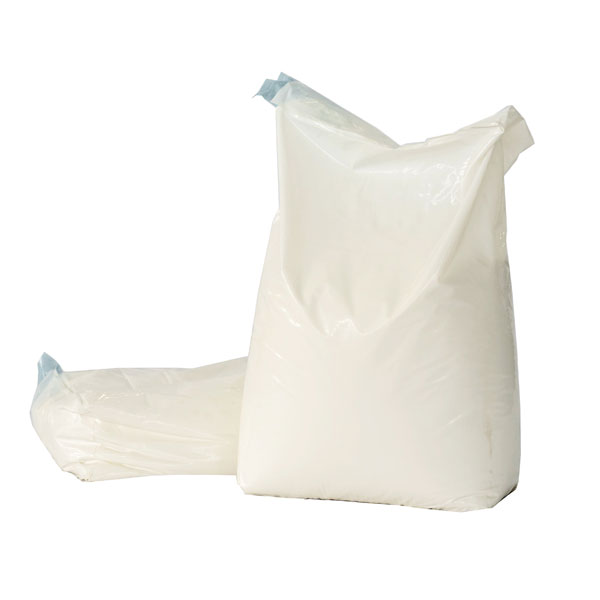
25kg multi-wall paper-plastic bags, ideal for private label distributors.
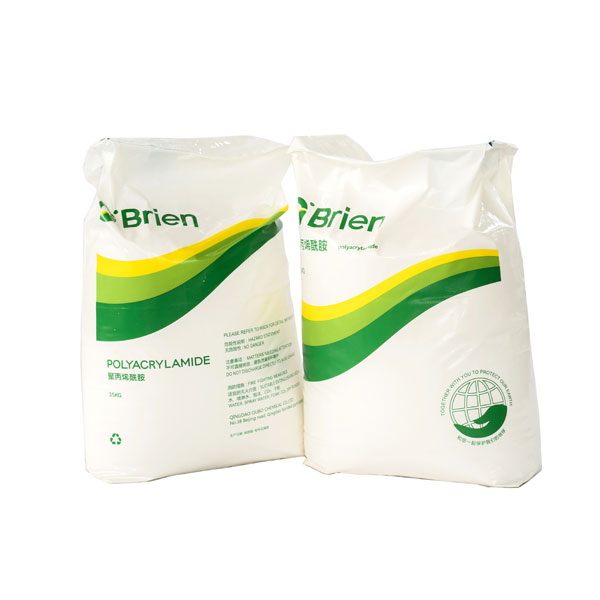
Standardized high-durability bags featuring product specifications & lot tracking.
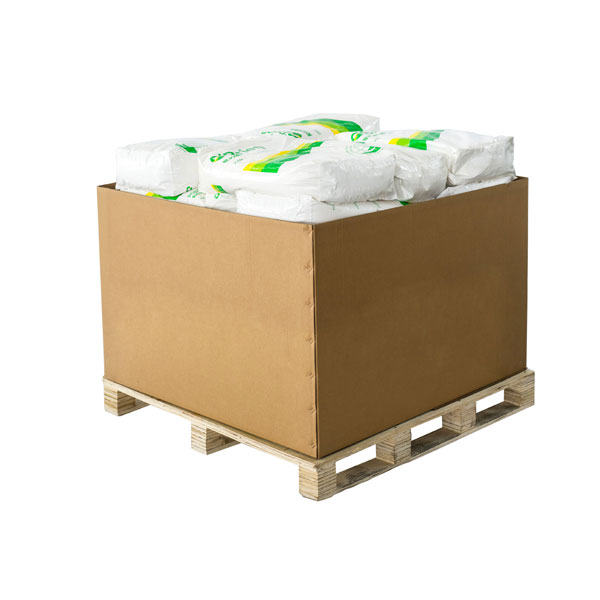
750kg - 1000kg FIBC jumbo super sacks for high-volume automated feed systems.
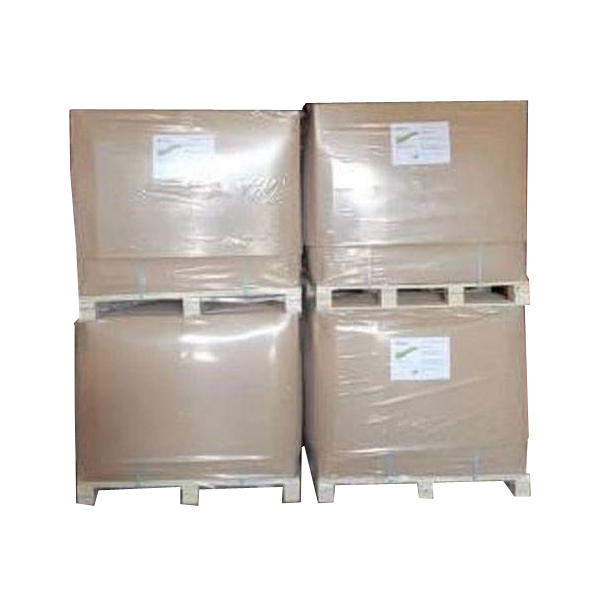
Shrink-wrapped, palletized units for safe sea container shipping & easy warehousing.
Pioneering Next-Generation Bio-Polymers and Smart Water Treatment Technologies
The global polyacrylamide landscape is undergoing a transformation driven by global decarbonization mandates, ESG (Environmental, Social, and Governance) compliance, and digital automation. As a technical leader, Oubo Chemical is executing a forward-looking R&D roadmap focused on three strategic pillars:
Advancing second-generation bio-catalysis utilizing renewable bio-feedstocks to produce acrylamide monomers, significantly lowering Scope 1 and Scope 2 carbon intensity per metric ton produced.
Collaborating with global engineering partners to integrate specialized real-time optical clarity sensors and machine learning control loops that automatically adjust NPAM dosage based on feed slurry turbidity and flow rates, reducing chemical waste by up to 25%.
Developing novel nonionic polymer structures featuring sterically hindered hydrophobic associations, maintaining elevated solution viscosity even in saturated brine and elevated temperature conditions (>120°C).
Direct Answers from Oubo Chemical's Technical Engineering Team
Explore Our Extended Catalog of High-Performance Cationic, Anionic & Nonionic Solutions
 Oubo Chemical