Top Industrial Wastewater Treatment Companies Worldwide

Time:2026-10-22 Author:Aria
0%

Industrial Wastewater Treatment is becoming a strategic priority for factories, utilities, and communities worldwide. Industrial production can generate water containing oils, metals, nutrients, solvents, salts, and suspended solids. These pollutants behave differently, so one treatment method rarely solves every problem.

This article introduces leading Industrial Wastewater Treatment companies across global markets. It examines their technologies, project experience, process reliability, energy use, and ability to manage complex wastewater streams. The review considers biological treatment, membrane filtration, dissolved air flotation, advanced oxidation, anaerobic digestion, and water reuse systems. It also looks at practical details, such as monitoring tanks, sludge handling, chemical storage, and operator support.

Dr. Kartik Chandran, a respected wastewater treatment researcher, has emphasized a powerful idea: “Wastewater is a resource, not a waste.” That perspective changes the evaluation. A strong provider should not only reduce contamination. It should help recover water, energy, nutrients, or valuable materials when conditions allow.

Real facilities are rarely perfect. Influent quality can change after one production shift. Membranes may foul. Sensors may drift. Energy costs may weaken an attractive design. These limitations deserve attention, not polished promises. Company claims also require careful checking against audited results, permits, published case studies, and long-term operating data.

This overview is designed for manufacturers, engineers, investors, and sustainability teams. It does not declare one universal winner. The best choice depends on wastewater chemistry, discharge requirements, site conditions, budget, and reuse goals. Performance on paper is useful. Performance beside a noisy treatment basin matters more.
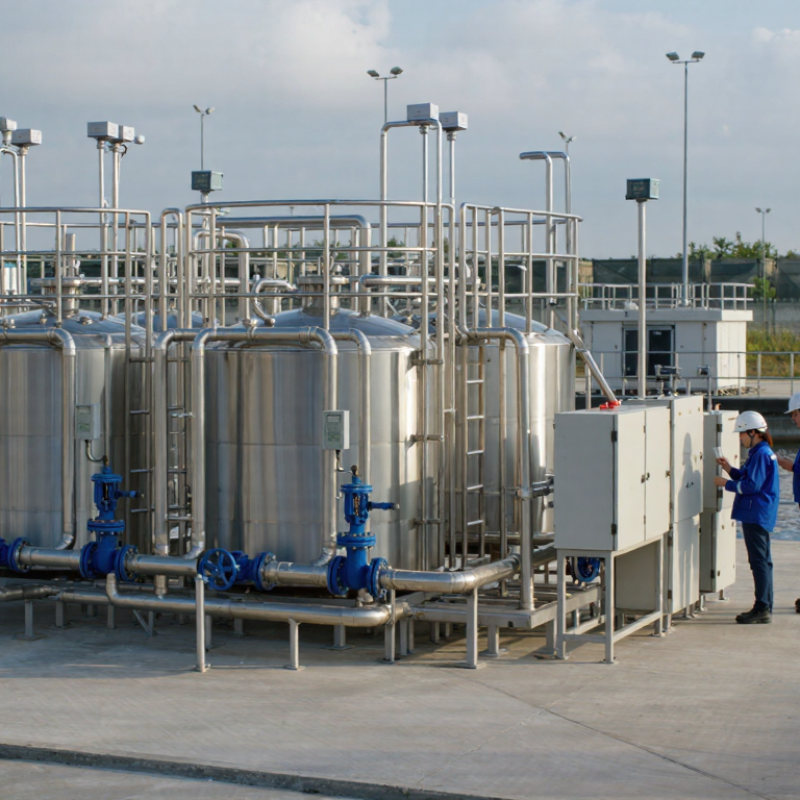
Top Industrial Wastewater Treatment Companies Worldwide

Industry Overview and the Role of Wastewater Treatment Companies

Industrial wastewater treatment companies play a practical role in protecting water resources and keeping manufacturing operations stable. Their work extends beyond installing tanks and pumps. They assess wastewater sources, identify chemical loads, and design treatment steps around actual production conditions. A textile facility may need color removal, while a metal plant may require careful control of dissolved metals. One standard solution rarely fits both.

Reliable providers combine process engineering with daily operational discipline. They monitor pH, suspended solids, conductivity, flow rate, and biological activity. Sensors provide useful warnings, but trained technicians still need to inspect samples and equipment. A cloudy sample can reveal a problem before laboratory results arrive. Small changes in sludge texture may also indicate oxygen imbalance or poor settling.

The strongest companies support the full treatment cycle. They help with site surveys, pilot testing, equipment selection, operator training, maintenance, and performance verification. Independent sampling can improve trust between facilities, regulators, and nearby communities. However, treatment systems are not flawless. Pumps fail, influent quality changes, and rushed maintenance can weaken results. That reality deserves more attention. Cost reduction is important, but cutting monitoring too deeply may create larger expenses later. Experienced providers therefore document changes, review data regularly, and adjust processes before discharge quality drifts beyond approved limits.

Key Technologies Used in Industrial Wastewater Treatment

Top Industrial Wastewater Treatment Companies Worldwide

Key Technologies Used in Industrial Wastewater Treatment

Industrial wastewater varies sharply between metal finishing, food processing, chemical production, and textile plants. A reliable system begins with sampling, not equipment selection. Engineers measure pH, conductivity, suspended solids, oils, metals, nutrients, and toxicity across several production cycles. Equalization tanks then balance flow and pollutant strength. This prevents sudden surges from damaging biological processes.

Physical treatment removes larger materials through screens, grit chambers, and settling tanks. Coagulation and flocculation help capture fine particles, while dissolved air flotation lifts oil and light solids to the surface. Biological systems use microorganisms to reduce organic pollution. Activated sludge, moving-bed biofilm reactors, and membrane bioreactors offer different balances between footprint, energy use, and effluent quality. They need careful oxygen control.

Advanced treatment becomes useful when contaminants remain difficult to remove. Ultrafiltration can separate fine particles, while reverse osmosis reduces dissolved salts and selected trace pollutants. Activated carbon adsorbs many organic compounds. Ozone and other oxidation methods can break down persistent substances, but they may create by-products requiring further monitoring. Disinfection commonly uses ultraviolet light or controlled chemical dosing. Sludge still demands attention. It contains concentrated pollutants and needs testing before reuse or disposal.

No technology works perfectly in every plant. Membranes can foul quickly, and biological treatment may struggle after a toxic discharge. Skilled operators adjust chemical doses, cleaning intervals, airflow, and retention time using current data. Online sensors help, but calibration is often overlooked. Real performance depends on maintenance, process discipline, and honest review of unexpected results.

Key Technologies Used in Industrial Wastewater Treatment

Typical pollutant removal efficiencies for widely used industrial wastewater treatment processes. Values are representative engineering midpoints and vary according to wastewater characteristics, system design, and operating conditions.

Primary clarification mainly removes suspended solids. Biological treatment targets biodegradable organic matter, while advanced membrane processes generally provide higher solids and nutrient removal.

Leading Industrial Wastewater Treatment Companies Worldwide

Leading industrial wastewater treatment companies worldwide are shifting from basic discharge control to resource recovery. Their systems combine biological treatment, membrane filtration, chemical separation, and digital monitoring. The strongest providers serve sectors such as chemicals, mining, food processing, metals, and pharmaceuticals.

The World Bank’s Quality Unknown report states that more than 80% of global wastewater is released without adequate treatment. That gap creates demand for reliable industrial solutions. UN-Water also identifies water quality as a growing pressure on public health, ecosystems, and economic productivity. Leading companies therefore design plants around local pollutants, flow changes, and reuse targets. A membrane system may recover process water, while anaerobic treatment can produce usable biogas. Yet no technology works everywhere. High energy use remains a serious weakness, especially for advanced membrane systems. Some project claims also sound better than real plant performance.

Tips: Check performance data from operating facilities, not only laboratory trials. Review energy use, sludge volume, chemical demand, and maintenance records. Ask whether the system handles peak flows, not just average flows. Independent testing matters.

The International Water Association recommends stronger monitoring and operational control for industrial wastewater management. Practical leaders follow this approach through online sensors, laboratory verification, and documented discharge records. They also train local operators before commissioning. That step is often underestimated. A technically impressive plant can fail through poor calibration, delayed maintenance, or unclear responsibility. Reliable companies worldwide combine engineering depth with transparent reporting and realistic lifecycle costs.

Major Industries and Regions Served by These Companies

Industrial wastewater treatment providers serve industries with sharply different pollution profiles. Food and beverage plants produce high organic loads and variable flows. Chemical and pharmaceutical facilities require membrane separation, advanced oxidation, and trace-contaminant control. Mining sites generate suspended solids and dissolved metals. Pulp and paper mills manage color, fibers, and high chemical oxygen demand. Textile factories often need color removal and salt management.

Regional demand follows industrial geography. UN-Water’s World Water Development Report estimates that industry uses about 20% of global freshwater withdrawals. Asia-Pacific carries the largest manufacturing base, concentrating projects near textile, electronics, chemical, and food-processing corridors. Treatment systems there often include compact biological units and water-reuse modules. The pressure is visible at river outfalls and crowded industrial parks.

Europe and North America emphasize reuse, nutrient control, and stricter discharge limits. Middle Eastern projects commonly combine wastewater treatment with desalination because freshwater is scarce. Latin American mining and agribusiness require modular systems for seasonal flows. UNEP’s 2023 wastewater report notes that over 80% of wastewater is released without adequate treatment worldwide, although monitoring quality varies. That uncertainty matters. Global figures can hide weak enforcement, informal discharge, and limited operator training. The World Bank also links wastewater reuse with circular-economy planning, but energy costs and sludge handling remain practical barriers. A technically sound plant can still underperform.

Top Industrial Wastewater Treatment Companies Worldwide - Major Industries and Regions Served by These Companies
Major Industry Typical Wastewater Characteristics Common Treatment Train Advanced Treatment and Reuse Principal Regions Served Typical Compliance or Reuse Objective
Oil and Gas Free and dispersed oil, hydrocarbons, suspended solids, salinity, sulfides and variable organic loading. API or CPI oil separation, dissolved-air flotation, coagulation and filtration, followed by biological treatment when biodegradable organics are present. Membrane bioreactors, ultrafiltration, reverse osmosis, produced-water treatment and evaporation or crystallization for high-salinity streams. Middle East North America Latin America Asia-Pacific Water reuse for cooling, injection or utility operations; controlled discharge that meets hydrocarbon, toxicity and salinity limits.
Petrochemicals and Chemicals Complex organic compounds, solvents, phenols, volatile compounds, suspended solids, color and fluctuating pH. Equalization, pH adjustment, oil removal, chemical precipitation, activated sludge or attached-growth biological treatment and tertiary filtration. Activated carbon, advanced oxidation, nanofiltration, reverse osmosis and specialized treatment for persistent organic contaminants. Europe North America China India Middle East Reduction of chemical oxygen demand, toxicity and specific contaminants before discharge or internal process reuse.
Food and Beverage High biodegradable organic load, fats, oils and grease, nutrients, suspended solids and variable flow caused by batch production. Screening, equalization, dissolved-air flotation, anaerobic digestion or anaerobic reactors, followed by aerobic biological treatment. Membrane bioreactors, tertiary disinfection, nutrient removal and treated-water reuse for washdown, cooling or irrigation where permitted. Worldwide Europe North America Asia-Pacific Biochemical oxygen demand and suspended-solids control, odor reduction, biogas recovery and safe non-potable reuse.
Pulp and Paper High color, suspended fibers, lignin-derived compounds, chemical oxygen demand, nutrients and variable pH. Primary clarification, dissolved-air flotation, activated sludge or aerated lagoons, followed by clarification and filtration. Ozonation, advanced oxidation, membrane filtration and color-removal systems for high-quality process-water recycling. Europe North America Brazil China Nordic countries Color, total suspended solids and organic-load reduction, with increasing emphasis on mill water conservation.
Mining and Mineral Processing Acidic or alkaline drainage, suspended solids, dissolved metals, sulfate, salinity and process reagents. Neutralization, lime or sulfide precipitation, clarification, filtration and high-rate solids separation. Ion exchange, reverse osmosis, electrodialysis, selective metal recovery and sulfate-removal processes. Australia Chile Peru North America Southern Africa Control of metals, acidity, sulfate and suspended solids; recovery of process water and protection of surface and groundwater.
Iron, Steel and Metal Finishing Heavy metals, oils, acids, alkalis, cyanide or chromium compounds in some processes, and high suspended-solids loading. Segregated stream management, pH adjustment, chemical precipitation, coagulation, clarification and media filtration. Ion exchange, membrane separation, electrochemical treatment and metal-bearing sludge recovery. Europe East Asia North America India Brazil Removal of metals and toxic compounds, compliance with trade-effluent limits and reuse of rinse or cooling water.
Semiconductor and Electronics Very low concentrations of metals, acids, bases, fluoride, solvents, photoresist compounds and highly variable contaminant streams. Source segregation, neutralization, fluoride precipitation, metals removal, clarification and high-purity filtration. Ultrafiltration, reverse osmosis, electrodeionization, ion exchange, ultraviolet oxidation and high-recovery water recycling. Taiwan South Korea Japan United States Europe Ultra-low contaminant concentrations for reuse in ultrapure-water production, cooling systems and manufacturing operations.
Pharmaceuticals and Biotechnology Active pharmaceutical ingredients, solvents, high-strength organics, nutrients, disinfectants and compounds that may inhibit biological treatment. Segregation and equalization, chemical treatment, activated carbon, biological treatment and tertiary clarification or filtration. Membrane bioreactors, ozonation, ultraviolet advanced oxidation, reverse osmosis and validated removal of trace organics. North America Europe India China Singapore Protection of receiving waters from active compounds, reliable removal of toxicity and production of suitable-quality utility water.
Textiles and Leather Strong color, high salinity, surfactants, suspended solids, variable pH, dyes, chromium in some leather processes and high organic load. Equalization, coagulation-flocculation, dissolved-air flotation, biological treatment and tertiary filtration. Ozonation, ultraviolet oxidation, activated carbon, nanofiltration and reverse osmosis for color and salt reduction. South Asia China Türkiye Southeast Asia Europe Color, salinity, chromium and organic-load control; increasing adoption of process-water recycling and zero-liquid-discharge systems.
Power Generation Cooling-tower blowdown, boiler blowdown, oil residues, suspended solids, metals, high temperature and elevated dissolved salts. Oil separation, clarification, chemical precipitation, filtration, softening and pH adjustment. Ultrafiltration, reverse osmosis, electrodeionization, evaporative systems and condensate polishing. Worldwide North America Europe Asia-Pacific Middle East Boiler-feed and cooling-water recovery, reduction of blowdown volumes and compliance with thermal, salinity and metals limits.
Municipal-Industrial Mixed Systems Combined domestic sewage and industrial influent containing organic matter, nutrients, solids, oils and site-specific industrial contaminants. Preliminary screening, primary clarification, biological nutrient removal, secondary clarification and disinfection. Tertiary filtration, ultraviolet or chlorine disinfection, nutrient polishing, activated carbon and water-reuse systems. Worldwide Europe North America Asia-Pacific Middle East Achievement of municipal discharge standards, protection of receiving waters and production of reclaimed water for non-potable uses.
Scope note: The table summarizes treatment capabilities and geographic markets commonly addressed by leading industrial wastewater-treatment providers. Actual treatment selection depends on influent composition, flow variability, local regulations, water-reuse targets and site-specific pilot testing.

Factors for Comparing Global Wastewater Treatment Providers

Comparing global wastewater treatment providers requires more than reading capacity figures. Start with the wastewater itself: flow volume, temperature, pH, salinity, suspended solids, and seasonal pollutants. A provider experienced with food, chemical, or municipal streams should explain how its process handles daily variation. Ask for verified performance data, not only projected removal rates.

Treatment design should match local permits and future operating conditions. Compare biological, membrane, clarification, disinfection, and sludge-handling requirements in practical terms. Pilot testing can reveal membrane fouling, odor risks, or unstable nutrient removal before construction begins. It costs time. It can prevent expensive surprises. No comparison is flawless.

Lifecycle evidence matters as much as installation price. Review energy use per cubic meter, chemical consumption, replacement intervals, maintenance access, and operator training. Examine independent laboratory records and references from facilities with similar influent conditions. Reliable providers explain assumptions, limitations, and emergency procedures clearly. They also provide data dashboards that track flow, turbidity, dissolved oxygen, and discharge quality.

Local technical support can determine whether equipment performs well after commissioning. Check response times, spare-parts availability, cybersecurity controls, and staff qualifications. A low quoted price may exclude sludge disposal, civil work, or permit adjustments. I would challenge every unclear line item. Even experienced buyers can overlook these hidden costs.

FAQS

What does an industrial wastewater treatment company actually do?

It studies wastewater sources, pollutant levels, flow patterns, and production conditions. It then designs treatment steps for the specific facility. One solution rarely fits every plant.

Why is wastewater sampling important before selecting equipment?

Sampling reveals pH, oils, metals, nutrients, conductivity, and suspended solids. Engineers should test several production cycles. A single sample can mislead.

How do equalization tanks support stable treatment?

Equalization tanks balance changing flow and pollutant strength. They reduce sudden surges entering biological systems. This protects microorganisms from shock.

Which physical methods remove larger wastewater pollutants?

Screens capture large debris, while grit chambers remove heavy particles. Settling tanks collect solids at the bottom. Flotation can lift oil and light solids.

How does biological treatment reduce organic pollution?

Microorganisms consume organic pollutants under controlled conditions. Common systems include activated sludge and biofilm reactors. Oxygen control matters greatly.

When are advanced treatment technologies useful?

Advanced systems help when ordinary treatment leaves difficult contaminants. Ultrafiltration separates fine particles, while reverse osmosis reduces dissolved salts. Activated carbon can capture many organic compounds.

What problems can occur during industrial wastewater treatment?

Pumps may fail, membranes may foul, and toxic inflows can harm biological systems. Poor maintenance can weaken discharge quality. Small warning signs matter.

How can operators improve treatment reliability?

They should review pH, flow, oxygen, solids, and conductivity data regularly. Technicians also need to inspect samples and equipment directly. Sensors help, but calibration is sometimes neglected.

Conclusion

Industrial Wastewater Treatment plays a vital role in protecting water resources, supporting sustainable production, and helping industries meet environmental responsibilities. As manufacturing, energy, mining, food processing, pharmaceuticals, and other sectors continue to expand, specialized treatment providers help manage complex wastewater streams containing organic matter, suspended solids, nutrients, oils, salts, and other contaminants. Their work combines process design, engineering, equipment integration, operation support, and performance monitoring.

Leading providers worldwide typically use a combination of physical, chemical, biological, membrane, thermal, and advanced oxidation technologies. Their services may cover municipal and industrial facilities across developed and emerging regions, with solutions adapted to local regulations, climate conditions, production processes, and water availability. When comparing global wastewater treatment companies, important factors include technical expertise, treatment efficiency, system reliability, energy consumption, total operating cost, scalability, after-sales support, innovation capacity, and experience in the target industry. The most effective partners deliver safe, practical, and resource-efficient systems that support both environmental protection and long-term business performance.

Aria

Aria

Aria is a dedicated marketing professional with a deep passion for innovative strategies and a keen understanding of our company's product offerings. With a wealth of experience in the industry, Aria excels at crafting engaging content that highlights the unique features and benefits of our......