Selecting the right Polymer Flocculant can determine whether a treatment system produces clear water or disappointing results. This guide examines seven widely used options for municipal, industrial, mining, and wastewater applications. Each product behaves differently in changing water chemistry.
Dr. James K. Edzwald, a respected water-treatment scholar, has stated, “Coagulation is a chemical process, while flocculation is a physical process.” That distinction matters. A polymer may bridge particles effectively, yet fail when dosage, mixing energy, or pH is poorly controlled. Small details matter.
In practical testing, operators should observe floc size, settling speed, filtrate clarity, and residual turbidity. A jar test remains useful. It shows what a laboratory result cannot fully predict: how fragile a floc becomes under real mixing conditions. Some products form large, fast-settling flocs. Others create tighter structures that resist shear but settle more slowly.
The seven selections in this article are not ranked by marketing claims alone. They are assessed through performance, handling requirements, compatibility, and application flexibility. Anionic, cationic, and nonionic grades each have suitable operating windows. Choosing only by molecular weight can create costly mistakes.
There is no universal winner. Water sources change. Treatment targets change. Even a proven Polymer Flocculant may require re-testing after seasonal shifts, process modifications, or changes in suspended solids. That uncomfortable limitation deserves attention.
This review aims to support better decisions through practical comparison, technical context, and cautious interpretation. Results should always be confirmed with representative water samples and controlled site trials.
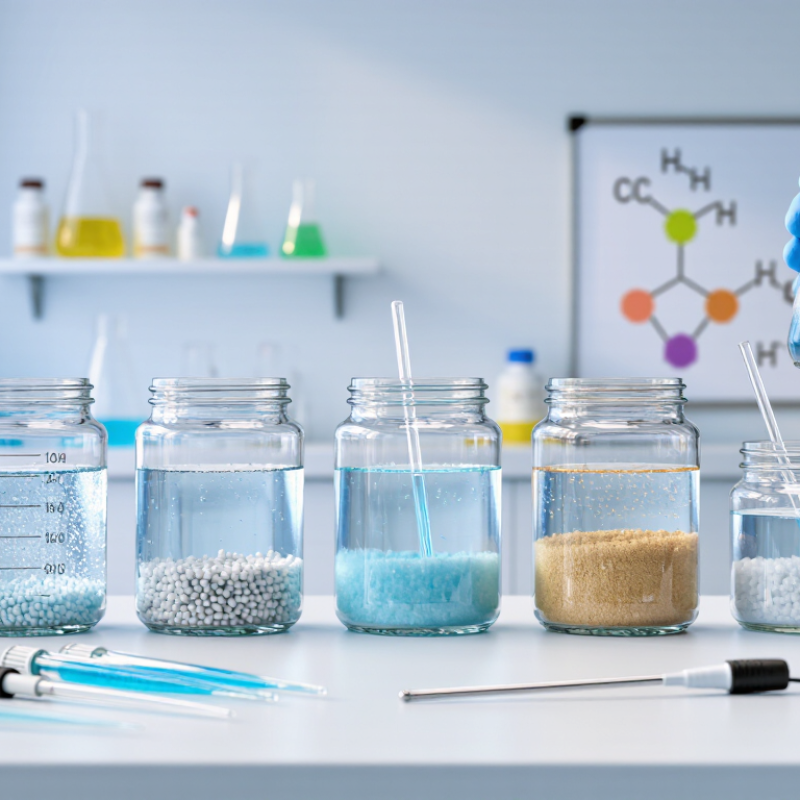
Polymer flocculants are long-chain, water-soluble molecules that gather fine particles in untreated water. Their charge may be cationic, anionic, or nearly neutral. Cationic polymers can neutralize negatively charged colloids. The polymer chain then forms bridges between particles, producing larger and heavier flocs. Gentle mixing helps these flocs grow. Excessive shear can break them apart. This mechanism can reduce settling time and improve filtration. It is not magic.
The best choice among seven polymer types depends on particle chemistry, pH, temperature, and mixing conditions. Operators normally compare products through jar tests, settling measurements, and residual monitoring. A neat laboratory result can mislead. The lab is not the river. U.S. EPA requirements state that conventional filtration systems should maintain turbidity at or below 0.3 NTU in at least 95% of monthly measurements. WHO guidance recommends turbidity below 1 NTU before disinfection, where possible, because particles may shield microorganisms. These figures explain why floc quality matters beyond visual clarity. Overdosing may increase sludge, raise filter headloss, and leave unwanted residuals. More polymer is not automatically better. (U.S. EPA, National Primary Drinking Water Regulations; WHO, Guidelines for Drinking-water Quality, 2022)
Typical representative dose midpoint by polymer type
Polymer flocculants work by neutralizing particle charge and/or forming long molecular bridges that bind suspended solids into larger, faster-settling flocs. The values shown are representative midpoints of commonly reported operating ranges in water and wastewater treatment. Actual dosage depends on turbidity, solids concentration, pH, alkalinity, mixing conditions, and jar-test results.
7 Best Polymer Flocculants for Water Treatment?
The best polymer depends on water chemistry, not popularity. Compare cationic, anionic, nonionic, amphoteric, emulsion, dry-powder, and blended formulations. Key properties include charge density, molecular weight, solubility, and stability. Charge density controls attraction between polymer chains and suspended particles. Molecular weight affects floc size and settling speed. High molecular weight can create larger flocs, but overdosing may produce slimy carryover. pH and temperature also change performance. Do not ignore them.
Tips: Run jar tests with actual process water. Record dosage, mixing time, floc size, settling clarity, and sludge texture. Check performance after realistic shear, because strong mixing can break fragile flocs. Small details matter.
Operators should also compare preparation time, storage life, residual polymer, and dewatering results. A product that settles quickly may still create wet sludge. That increases handling costs. Environmental compatibility deserves careful review, especially where treated water returns to natural systems. Laboratory results guide decisions, but they do not replace plant trials. I have seen a promising dose fail after rainfall changed the incoming turbidity. That result was inconvenient, but useful. Start with controlled testing, then adjust gradually under qualified supervision.
| Rank | Generic Flocculant Type | Polymer Chemistry | Charge Type | Typical Molecular Weight | Common Water-Treatment Applications | Typical Working pH | Indicative Dose Range | Key Advantages | Important Limitations |
|---|---|---|---|---|---|---|---|---|---|
| 1 | Anionic Polyacrylamide | Partially hydrolyzed polyacrylamide with carboxylate groups | Anionic | High to very high Approximately 5–25 million g/mol |
Mineral processing, sand and gravel washing, industrial clarification, sludge thickening, and sediment control | Approximately 6–9 | About 0.1–5 mg/L in clarification; higher doses may be used for sludge conditioning | Strong bridging flocculation, large rapidly settling flocs, effective at low dosage, and generally low toxicity when properly handled | Performance depends strongly on pH, water hardness, mixing energy, and polymer charge density; overdosing can restabilize particles |
| 2 | Cationic Polyacrylamide | Polyacrylamide containing cationic quaternary ammonium or related groups | Cationic | Medium to high Approximately 1–15 million g/mol |
Municipal wastewater, biological sludge dewatering, dissolved-air flotation, and organic-solids separation | Approximately 5–9 | About 1–20 mg/L for liquid clarification; commonly 1–10 kg per tonne of dry solids for sludge conditioning | Efficient charge neutralization, strong affinity for negatively charged biological solids, and good dewatering performance | Can be sensitive to anionic contaminants and high alkalinity; residual cationic polymer should be minimized in treated water |
| 3 | Nonionic Polyacrylamide | Low-hydrolysis polyacrylamide with little or no ionic charge | Nonionic | High Approximately 5–20 million g/mol |
Acidic mineral wastewater, coal washing, pulp and paper operations, and applications where ionic interactions must be limited | Approximately 3–8 | About 0.2–10 mg/L, depending on suspended-solids concentration and particle characteristics | Broad compatibility, strong polymer bridging, and useful performance in low-pH systems or waters with variable ionic composition | Usually provides weaker charge neutralization than ionic polymers; may require higher dosage or a coagulant for very fine colloids |
| 4 | PolyDADMAC | Poly(diallyldimethylammonium chloride), a water-soluble cationic polymer | Strongly cationic | Low to medium Approximately 100,000–1 million g/mol |
Drinking-water clarification, color removal, turbidity reduction, wastewater pretreatment, and flotation processes | Approximately 4–10 | About 0.5–20 mg/L, depending on raw-water quality and charge demand | Fast charge neutralization, good color removal, easy liquid handling, and relatively low sensitivity to molecular-weight selection | Generally forms smaller flocs than high-molecular-weight polyacrylamide; excessive dosage can reverse particle charge |
| 5 | Polyamine | Water-soluble cationic polyamine, commonly based on epichlorohydrin–amine or related chemistry | Strongly cationic | Low to medium Approximately 10,000–1 million g/mol |
Color and turbidity removal, industrial wastewater, oily wastewater pretreatment, and primary clarification | Approximately 4–10 | About 1–50 mg/L, depending on color, organic matter, and suspended solids | Rapid reaction, effective charge neutralization over a broad pH range, and good performance for color-bearing organic matter | Often needs to be combined with an inorganic coagulant or bridging polymer for dense, fast-settling flocs |
| 6 | Amphoteric Polyacrylamide | Polyacrylamide containing both cationic and anionic functional groups | Amphoteric | Medium to high Approximately 1–15 million g/mol |
Complex industrial wastewater, mixed-sludge dewatering, paper-process water, and systems with fluctuating charge demand | Approximately 5–9 | About 1–30 mg/L for clarification; sludge-conditioning dosage varies with solids concentration | Flexible charge behavior, good tolerance of mixed organic and inorganic solids, and useful performance when water chemistry changes | Usually more expensive and more difficult to optimize than single-charge polymers; jar testing is strongly recommended |
| 7 | Polyacrylic Acid | Water-soluble polyacrylic acid or partially neutralized polyacrylate | Anionic | Low to medium Approximately 2,000–1 million g/mol |
Fine-particle dispersion control, mineral slurries, membrane pretreatment support, and selected industrial clarification processes | Approximately 6–10 | About 1–100 mg/L, depending on particle surface area and calcium concentration | Good interaction with multivalent ions and mineral surfaces; useful where controlled dispersion or selective particle interaction is required | Not a universal flocculant; excessive dosage may stabilize suspensions, and performance can be affected by calcium and other divalent ions |
Note: The values shown are representative industry ranges for generic polymer chemistries, not guaranteed specifications. Actual selection and dosage should be confirmed through jar testing, sludge-dewatering trials, and site-specific water analysis.
Water treatment rarely has one universal flocculant. Cationic polymers suit sludge dewatering and negatively charged solids. Anionic polymers often improve mineral slurry clarification. Nonionic polymers support wastewater with changing chemistry. Amphoteric polymers handle mixed charges in difficult sludge. Powdered polyacrylamide offers long storage life when kept dry. Liquid emulsion polymers dissolve faster during busy operations. PolyDADMAC-type coagulant polymers work well for color removal and compact flocs. Each option needs jar testing before full-scale dosing.
In daily operation, I watch floc size, settling speed, filtrate clarity, and sludge texture. A strong floc should remain intact during gentle mixing. Excessive shear can break it apart quickly. Water temperature, pH, salinity, and suspended solids can change performance. Operators should also check whether residual polymer affects filtration or discharge quality. No selection is perfect. A polymer that works today may underperform after a seasonal process change. That limitation deserves attention.
Tips: Prepare test solutions with clean water and consistent mixing. Compare several dosages, not only one. Record settling time and supernatant clarity. Start with the lowest effective dose. Allow enough maturation time for dry polymers. Confirm feeding equipment can handle the product’s viscosity. Small-scale trials are useful, but plant conditions remain different. That gap is easy to underestimate.
Selecting the seven best polymer flocculants starts with water chemistry, not a product ranking. The World Health Organization’s Guidelines for Drinking-water Quality recommend turbidity below 1 NTU before disinfection. Your process should therefore target clarity, not merely larger flocs. Test pH, alkalinity, temperature, conductivity, suspended solids, and oil content. Small changes can alter polymer performance sharply.
Cationic polymers often suit negatively charged particles in municipal wastewater. Anionic or nonionic polymers may perform better with metal hydroxide flocs, mineral slurries, or high-solids industrial water. This is not a fixed rule. The U.S. EPA Drinking Water Treatability Database shows coagulation and flocculation performance depends strongly on source-water conditions and treatment combinations. Begin with a broad dose range, then run jar tests using the actual water. Observe floc size, settling speed, supernatant clarity, and residual polymer.
A clear jar test can still mislead. Seasonal algae, rainfall, temperature shifts, and changing sludge age may weaken full-scale results. I would avoid selecting a polymer from one test alone. The WHO also links low turbidity with more reliable disinfection, while EPA residuals guidance emphasizes that chemical dose affects sludge production. Record both benefits and waste impacts. Recheck performance after filtration, because a fast-settling floc may still create fine particles downstream. A practical selection needs repeat tests, operator experience, and cautious dose control.
Polymer flocculants can improve settling, but dosing requires measured testing. A good dose is not a fixed number. It depends on water chemistry, suspended solids, temperature, and mixing conditions. Begin with a representative sample, then perform jar tests using several low-to-high doses. Add polymer slowly and mix gently after rapid dispersion. Observe floc size, settling speed, and water clarity.
Prepare the polymer solution according to its technical data sheet. Allow adequate hydration time. Undissolved particles can block pumps or create uneven treatment. Use a calibrated dosing pump and record flow, concentration, pH, and turbidity. Experienced operators often adjust dosing gradually rather than making large changes. Field results may differ from laboratory tests. That gap deserves attention. I have seen apparently clear water produce weak flocs after process conditions changed.
Tips: Wear chemical-resistant gloves, eye protection, and protective clothing. Keep the safety data sheet accessible. Avoid breathing dry polymer dust. Clean spills quickly because wet polymer creates an extremely slippery surface. Use clean, labeled containers for stock solutions. Never mix products unless compatibility is confirmed by qualified personnel. Check eyewash stations and ventilation before handling. Re-test after major changes in raw water quality, temperature, or production rate. Small records matter.
Start with water chemistry, not product rankings. Test pH, alkalinity, temperature, conductivity, solids, and oil content. The right choice depends on actual conditions.
Cationic polymers often suit negatively charged particles in municipal wastewater. This is only a starting point. Confirm performance with actual-water jar tests.
They may suit metal hydroxide flocs, mineral slurries, or high-solids industrial water. Water conditions can change the result. Avoid fixed assumptions.
Use representative water and several low-to-high doses. Mix rapidly for dispersion, then mix gently. Observe floc size, settling speed, clarity, and residual polymer.
No. A clear jar can still fool you. Rainfall, algae, temperature, and sludge age may change full-scale performance.
Record flow, concentration, pH, turbidity, dose, and mixing conditions. Small records reveal patterns. They also expose mistakes that memory hides.
Follow the technical data sheet and allow enough hydration time. Undissolved particles may block pumps or cause uneven treatment. Clean, labeled containers help.
Wear chemical-resistant gloves, eye protection, and protective clothing. Avoid dry dust. Wet polymer makes floors extremely slippery. Clean spills quickly.
Re-test after changes in raw water, temperature, production rate, filtration, or sludge conditions. Fast-settling flocs may still create fine downstream particles.
Use a calibrated dosing pump and adjust gradually. Large changes can create excess sludge or weak flocs. I would still question apparently perfect water.
Polymer Flocculant is a water treatment aid that helps tiny suspended particles join together into larger, heavier flocs, making them easier to remove through sedimentation, clarification, or filtration. This article explains how charge neutralization, adsorption, and polymer bridging support the flocculation process. It also compares important properties, including ionic character, molecular weight, charge density, solubility, settling performance, and compatibility with different water chemistries.
Seven leading types of polymer flocculants are presented for varied treatment needs, such as municipal water, industrial wastewater, mineral processing, sludge dewatering, and oily or highly turbid water. The guide explains how to select a suitable product by considering pH, particle concentration, temperature, salinity, organic content, and existing coagulants. It also highlights the importance of jar testing, gradual dose adjustment, proper preparation, and safe handling. Careful testing and monitoring can improve clarity, reduce chemical waste, and support stable treatment performance.

Oubo Chemical