Choosing the right Polyacrylamide Flocculant can determine whether a treatment system runs smoothly or struggles with cloudy water, overflowing sludge, and rising chemical costs. The best choice depends on water chemistry, particle type, equipment, and operating conditions. A product that performs well in municipal wastewater may fail in mining slurry or paper-process water.
This guide presents seven practical tips for making a more reliable selection. It considers ionic character, molecular weight, charge density, dissolution behavior, and supplier support. Small details matter. A ten-minute jar test can reveal more than a polished product brochure. Operators should compare floc size, settling speed, filtrate clarity, and sludge texture under realistic conditions.
Field experience also shows that no single grade works everywhere. Temperature changes, pH swings, mixing intensity, and fluctuating solids can alter performance. A clear solution in the laboratory may behave differently beside a noisy belt press. That mistake is common. It deserves attention.
Reliable decisions require documented testing, traceable product information, and advice from qualified water-treatment professionals. Request technical data sheets, safety documentation, recommended dosing ranges, and batch consistency records. Confirm that the product suits the intended process and local requirements. Avoid selecting only by price. The cheapest bag can create higher costs through poor dewatering, blocked lines, or excessive residual polymer. These seven tips provide a practical starting point, while continued monitoring remains essential. Performance should be measured, questioned, and improved over time.
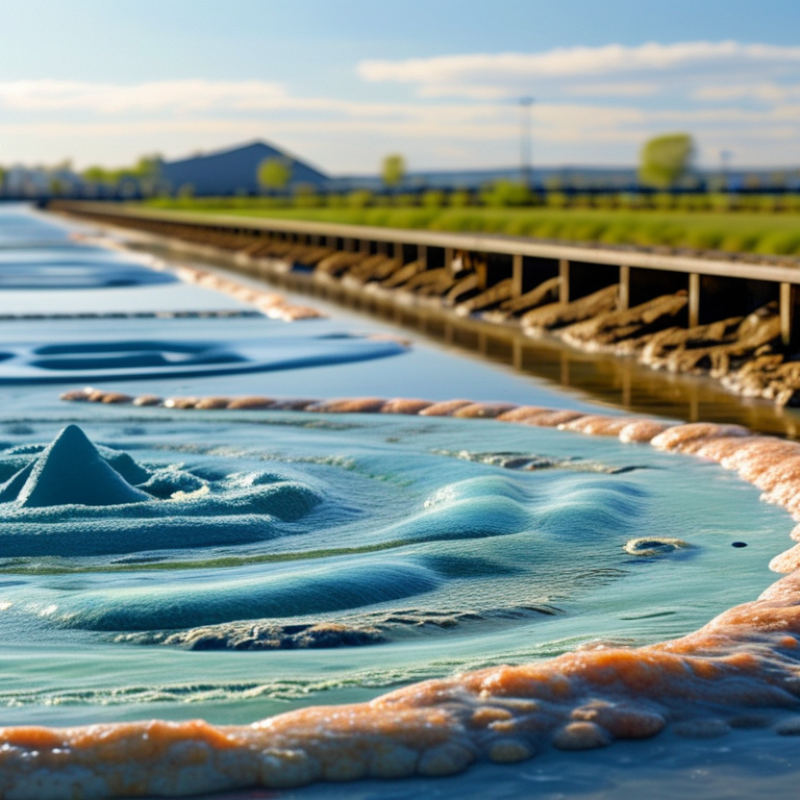
Polyacrylamide flocculant is a water-soluble polymer used to gather fine particles into larger, heavier flocs. These flocs settle faster or separate more easily during filtration. Its main applications include municipal wastewater treatment, industrial effluent clarification, sludge dewatering, mining water recovery, and paper manufacturing. The correct selection depends on water chemistry, not appearance alone.
Start by identifying the particle type and surface charge. Anionic, cationic, and nonionic grades behave differently. Next, consider molecular weight and hydrolysis level, because these affect floc strength and settling speed. Run a jar test with actual process water. Small differences in pH, temperature, and solids concentration can change the result. Do not trust a single test. Recheck it during production changes.
Use a dilute solution and allow enough mixing time for hydration. Overdosing may create slimy water and raise operating costs. Underdosing leaves cloudy filtrate. Measure residual turbidity, sludge volume, and cake dryness instead of judging flocs by size alone. Safe handling also matters; dry polymer can make floors dangerously slippery. Store it sealed and away from moisture. I have found that a product performing well in summer can behave poorly in colder water. That is easy to overlook. A perfect prediction is unrealistic, so operators should record dosage, pH, and settling results after each trial.
| No. | Selection Tip | Key Data Dimension | Practical Guidance | Typical Applications |
|---|---|---|---|---|
| 1 | Identify the ionic type | Nonionic, anionic, or cationic charge | Cationic grades are commonly used to dewater negatively charged biological sludge. Anionic grades are often used with mineral particles and inorganic suspensions. Nonionic grades can be useful where charge conditions are weak or highly variable. | Municipal sludge dewatering, mineral processing, wastewater clarification, paper-process water |
| 2 | Match molecular weight to the separation task | Molecular-weight category and chain length | Higher-molecular-weight polymers generally provide stronger particle bridging and larger flocs, while lower-molecular-weight grades may be preferable when rapid charge neutralization or compact flocs are required. The optimum depends on mixing and solids concentration. | Settling enhancement, thickening, filtration, flotation, and sludge conditioning |
| 3 | Consider charge density and water chemistry | Charge density, pH, salinity, hardness, and competing ions | Charge performance can change with pH, dissolved salts, metal ions, organic matter, and coagulant use. Select a grade that remains effective under the actual process conditions rather than relying only on a generic product description. | Industrial wastewater, high-salinity water, mining water, food-processing effluent |
| 4 | Check hydrolysis and functional performance | Degree of hydrolysis, solubility, activation time, and solution stability | Partially hydrolyzed polyacrylamide has anionic groups that influence adsorption and bridging. Confirm that the selected grade dissolves completely, does not form persistent fisheyes, and maintains performance during the intended storage and dosing period. | Mineral clarification, tailings treatment, sludge thickening, and process-water recycling |
| 5 | Use jar testing before full-scale selection | Settling velocity, turbidity, filtrate clarity, cake dryness, and residual polymer | Test several charge types and dosage levels using representative samples. A useful starting laboratory range is often about 0.1–10 mg/L for clarification trials, but the final dose must be determined experimentally and may be higher for concentrated sludge or tailings. | Clarifiers, dissolved-air flotation units, belt presses, centrifuges, and filter presses |
| 6 | Evaluate preparation and dosing requirements | Product form, make-down concentration, maturation time, and shear sensitivity | Powdered PAM requires controlled wetting and sufficient hydration. Excessive shear can break polymer chains and reduce floc strength. Prepare solutions with clean water and follow the supplier’s recommended concentration and aging time. | Automatic polymer make-down systems, continuous dosing lines, and batch treatment systems |
| 7 | Confirm safety, compliance, and environmental requirements | Residual acrylamide, handling controls, approved use, and disposal requirements | Select products with documented residual-acrylamide specifications appropriate for the intended use. Dry powder can create slippery surfaces when wet and may generate dust, so use suitable ventilation, protective equipment, spill controls, and regulatory checks. | Drinking-water treatment, wastewater treatment, food-related processes, and industrial water recycling |
Measure pH, temperature, conductivity, turbidity, suspended solids, and organic content. Test samples during dry weather, rainfall, and cleaning periods. One sample can mislead.
Define the target first. You may need clearer overflow, faster settling, improved flotation, or a firmer dewatered cake. Different goals create different floc structures.
Jar tests compare charge density, molecular weight, and dosage using actual wastewater. Observe floc size, settling speed, filtrate clarity, and sludge release. Clear laboratory water is not enough.
A practical starting range is 2–10 kilograms of active polymer per tonne of dry solids. Adjust gradually. Too much can create sticky sludge and higher costs.
Prepare a solution near 0.05–0.5%. Allow roughly 30–60 minutes for maturation. Use gentle agitation. Violent mixing can damage polymer chains.
Look for fish-eyes, cloudy solution, uneven wetting, or unexpected viscosity. Undissolved particles may appear like small rubbery beads. The solution should become reasonably uniform.
Request recent batch records, active content, ionic type, moisture, and residual monomer data. Ask for samples from different production lots. One sample proves very little.
Include dosage, transport, mixing energy, equipment cleaning, sludge handling, and rejected batches. A cheaper product may require nearly twice the dosage. We sometimes compare prices too neatly.
Choosing the right Polyacrylamide Flocculant is essential for achieving efficient and consistent water treatment results. Start by understanding its main applications, such as wastewater clarification, sludge dewatering, mineral processing, and industrial water purification. Then evaluate the treatment conditions, including water chemistry, suspended solids, pH, temperature, and the desired flocculation goal. These factors help determine whether an anionic, cationic, or nonionic product is most suitable, as well as the appropriate molecular weight and charge density.
Product quality should also be assessed through dissolution speed, solution stability, floc strength, and dosage requirements. Before making a long-term decision, conduct jar tests or small-scale trials to confirm performance under actual operating conditions. Finally, examine the supplier’s technical support, quality control procedures, safety documentation, delivery reliability, and total operating cost. A product with a slightly higher purchase price may offer better value if it reduces dosage, improves dewatering, minimizes waste, and provides stable treatment performance.

 Oubo Chemical